
1. Introduction
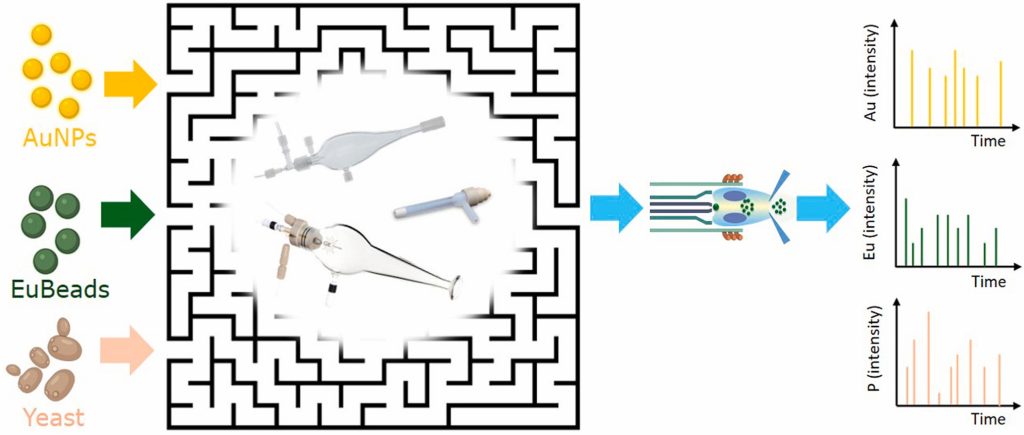
During the last years, the number of applications related to single particle and single cell ICP-MS (SP/SC-ICP-MS) has rapidly increased.
The high sensitivity and fast acquisition capabilities of modern ICP-MS instruments allow the detection of individual nanoparticles,
microparticles and biological cells with excellent temporal resolution and elemental sensitivity. These capabilities have expanded the use
of ICP-MS into fields such as nanomaterial characterization, biomarker quantification, environmental monitoring, toxicology and
biomedical research.
Despite the advances in ICP-MS instrumentation, the sample introduction system plays a critical role in the performance of SP/SC-ICP-MS methodologies. The transport efficiency (the fraction of the sample that is actually transported into the plasma and ionized)
directly affects the accuracy of particle counting, the quantitative reliability and, eventually, the amount of sample needed for the
analysis.
Conventional sample introduction systems based on concentric nebulizers and filtering spray chambers (cyclonic or Scott-type)
typically provide transport efficiencies in the range of 5% and below, meaning that only a small fraction of the analyzed objects is
efficiently detected. To overcome these limitations, dedicated lowflow total-consumption sample introduction systems have been developed. They usually operate at sample flow rates in the range of a few tens of microliters per minute and incorporate dedicated spray
chambers with sheath gas flows to minimize sample losses and improve the transport of the aerosol into the plasma reaching higher
transport efficiencies above 50% and, in some cases, close to 100%[1]. Such approaches are specially interesting for single-cell
application because they reduce sample consumption while increasing the fraction and representativeness of the analyzed cells
The MassNeb® nebulizer from Ingeniatrics provides a highly versatile alternative for ICP-MS sample introduction. Unlike conventional nebulizers optimized for a narrow optimal flow-rate range, the MassNeb® can be operated both at conventional ICP-MS flow rates and under microflow conditions with excellent features in both flow ranges. This application note summarizes recently published results comparing the MassNeb® with different commercial sample introduction systems for SP-ICP-MS and SC-ICP-MS applications[2]. The study demonstrates that the MassNeb® provides enhanced analytical sensitivity under conventional operation while also achieving transport efficiencies close to 90% under total-consumption microflow conditions.
2. Experimental
All measurements were performed using a Thermo Scientific™ iCAP™ TQ ICP-MS instrument operated mainly in single quadrupole mode. Different combinations of nebulizers and spray chambers were evaluated in order to compare conventional and microflow sample introduction approaches.
The conventional ICP-MS configuration consisted of a standard MicroMist concentric nebulizer combined with a cyclonic spray chamber and operated at a sample flow rate of 0.4 mL/min. This configuration was compared with the use of the MassNeb® nebulizer under equivalent operating conditions.
Two dedicated low-flow systems for single-cell analysis were also evaluated. The first one was the High Efficiency Sample Introduction System (HE-SIS) from Glass Expansion, which combines a microflow nebulizer and a dedicated spray chamber using a sheath gas flow. The second system was a Single Cell Introduction Kit (SCIK) from Elemental Scientific, which incorporates CytoNeb microflow nebulizer and the CytoSpray total consumption spray chamber.
In addition to the commercial configurations, the MassNeb® nebulizer was also combined with both HE-SIS and CytoSpray spray chambers in order to evaluate its performance under microflow conditions. One of the most relevant characteristics of the MassNeb® is its capability to operate efficiently over a broad flow-rate range, from conventional ICP-MS conditions down to 10 µL/min.
Different solutions were used to evaluate the analytical performance and transport efficiency of the systems. Dissolved elemental standards containing Li, Co, In, Ce, Ba and U were used for sensitivity evaluation. Transport efficiency was tested using three representative model systems: 30 nm gold nanoparticles, europium-loaded polymeric beads and selenized yeast cells. These materials allowed the comparison of transport efficiency for nanoparticles, microparticles and biological cells with different sizes and physicochemical properties.
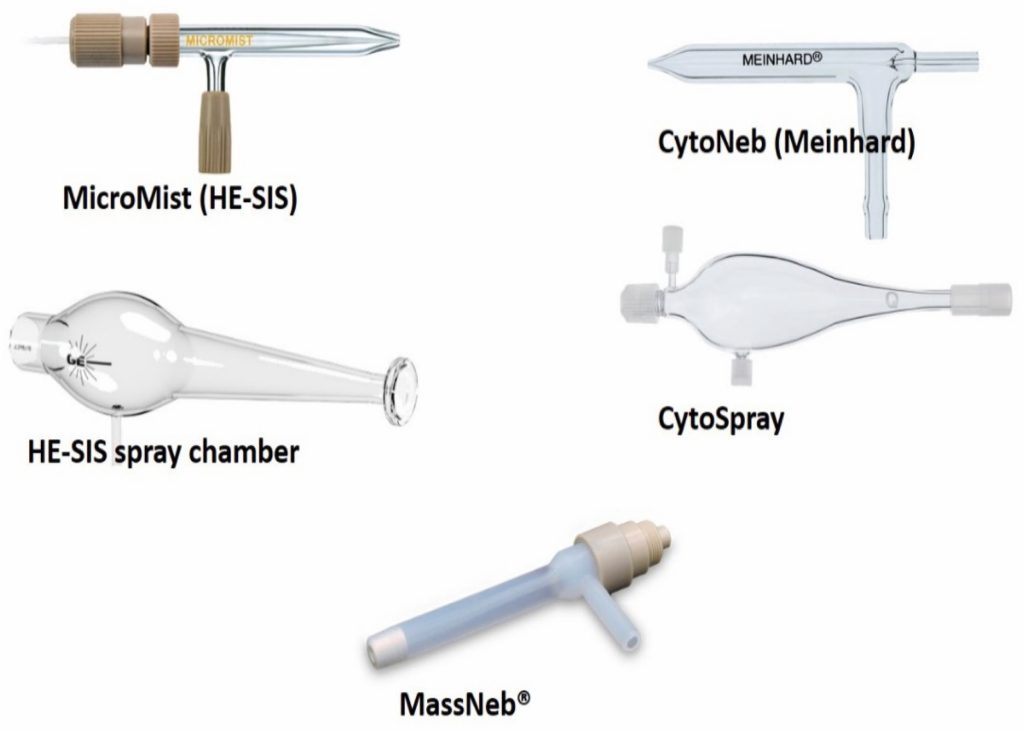
Figure 1. Components of the six sample introduction configurations compared in this study. Adapted from Ref. [2].
3. Results and discussion
3.1 Enhanced sensitivity for conventional elemental analysis in solutions
The analytical sensitivity obtained under conventional ICP-MS conditions was evaluated by comparing the standard MicroMist nebulizer and the MassNeb® coupled to a cyclonic spray chamber and operated at 0.4 mL/min.
The published results shown in Figure 2 demonstrated that the combination of MassNeb® and the cyclonic spray chamber provided the highest analytical sensitivity among all evaluated conventional sample introduction systems. The increase in sensitivity was particularly remarkable for low-mass isotopes such as ⁷Li⁺, where the normalized response reached approximately 160% relative to the standard MicroMist configuration. Enhanced responses were also observed for ⁵⁹Co⁺, ¹¹⁵In⁺ and ²³⁸U⁺.
In combination with total-consumption systems, MassNeb® provided similar or higher sensitivities when compared to the standard commercial combinations of nebulizer and spray chamber. It must be noted, however, that low-flow (10 µL/min) sample introduction systems provide 30-50% lower sensitivities than standard high-flow systems because of the lower mass of analyte entering the plasma.
These results demonstrate that the MassNeb® can significantly improve ICP-MS signal intensity without requiring major hardware modifications or dedicated accessories. The improved sensitivity is especially advantageous for applications involving low elemental masses or trace-level measurements, where signal intensity directly affects detection capability and quantitative reliability.
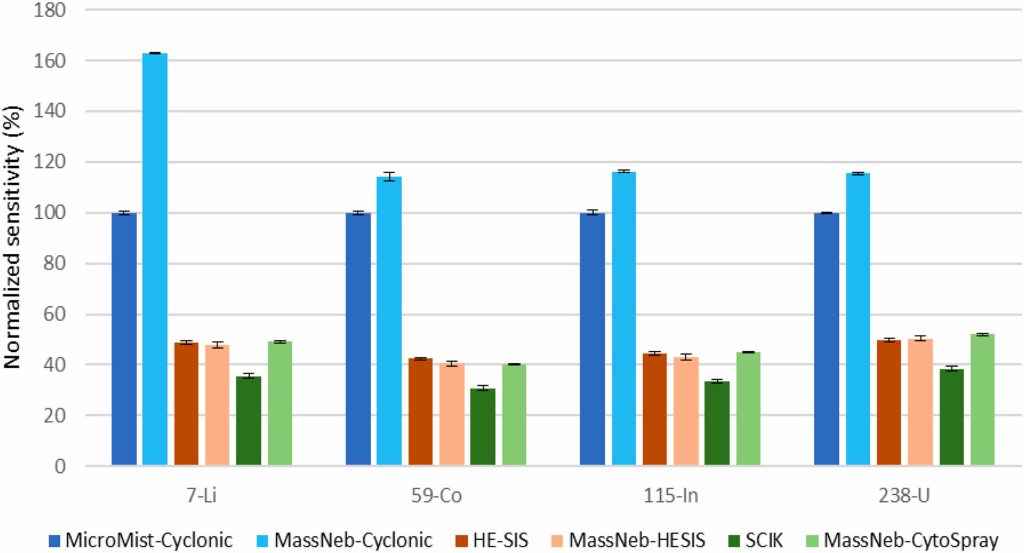
Figure 2. Normalized sensitivities for ⁷Li⁺, ⁵⁹Co⁺, ¹¹⁵In⁺ and ²³⁸U⁺ across the six sample introduction configurations evaluated, expressed as percentage relative to the standard MicroMist + cyclonic spray chamber combination. Adapted from Ref. [2].
3.2 Transport efficiency using conventional cyclonic systems
Although conventional cyclonic spray chambers are not specifically designed for SP/SC-ICP-MS applications, they remain widely used because of their simplicity and availability in many laboratories. For this reason, the transport efficiency obtained using the MassNeb® and the conventional cyclonic spray chamber was also evaluated.
The transport efficiency values obtained with conventional systems were generally below 5% (Figure 3), which is consistent with previously reported values for filtering spray chambers. However, the MassNeb® consistently provided higher transport efficiencies than the standard MicroMist nebulizer for the gold nanoparticles. No significant improvements could be observed for europium-loaded polymeric beads and yeast cells.
These results demonstrate that even under conventional ICP-MS conditions, the MassNeb® improves effective transport of nanoparticles while not significantly decreasing this of microparticles and cells. Transport efficiency strongly depended on the nature and size of the analyzed material — gold nanoparticles (30 nm) generally showed higher transport efficiencies than polymeric beads (2 µm) and yeast cells (5 µm), highlighting the importance of selecting appropriate standards for SP/SC-ICP-MS applications.
3.3 High transport efficiency under microflow operation
The most remarkable results of the study were obtained under total-consumption microflow conditions. When operated at 10 µL/min and combined with total-consumption spray chambers, all systems provided significantly higher transport efficiencies compared to conventional cyclonic configurations (Figure 4).
The two commercial single-cell systems evaluated in the study provided transport efficiencies typically ranging between 60% and 70% for nanoparticles and polymeric beads. In contrast, the combination of the MassNeb® with the CytoSpray chamber achieved transport efficiencies close to 90% for both nanoparticles and polymeric beads, representing the highest values obtained in the entire comparison.
These results are particularly relevant for single-cell and nanoparticle studies because high transport efficiency directly increases the fraction of analyzed objects (Figure 5). This improves particle counting statistics, reduces sample consumption, and enhances confidence in quantitative measurements by decreasing the possibility of size-dependent particle losses. The MassNeb® combined with the HE-SIS spray chamber also provided competitive transport efficiencies comparable to the dedicated commercial systems.
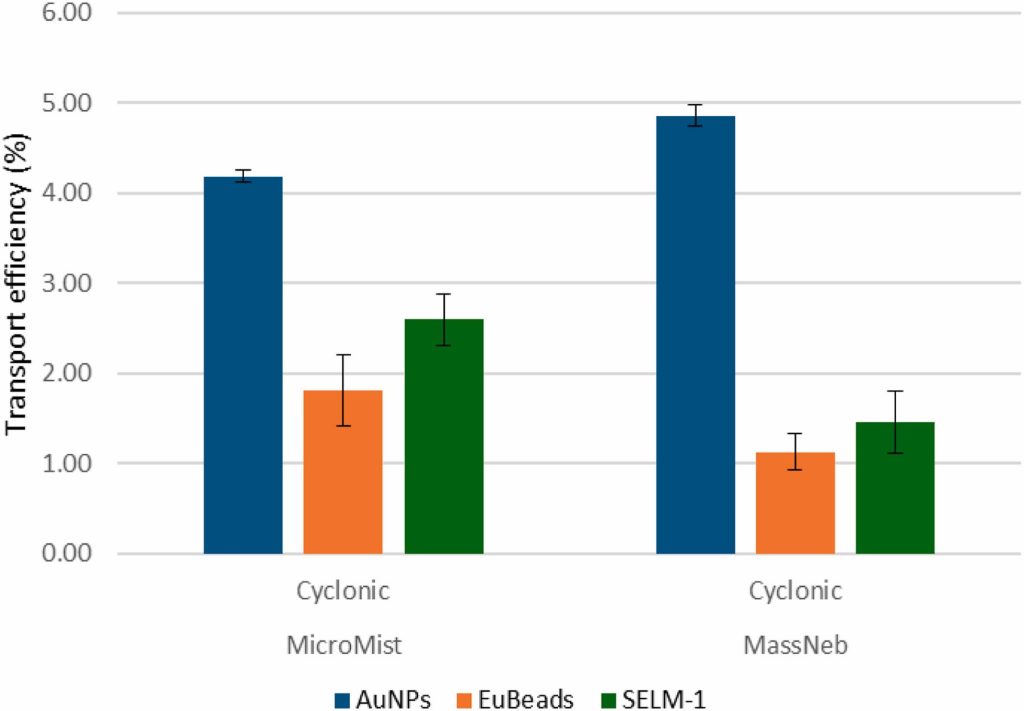
Figure 3. Transport efficiencies with MicroMist and MassNeb® coupled to conventional cyclonic spray chamber for gold nanoparticles (AuNPs), Eu-loaded polymeric beads (EuBeads) and selenized yeast SELM-1. Adapted from Ref. [2].
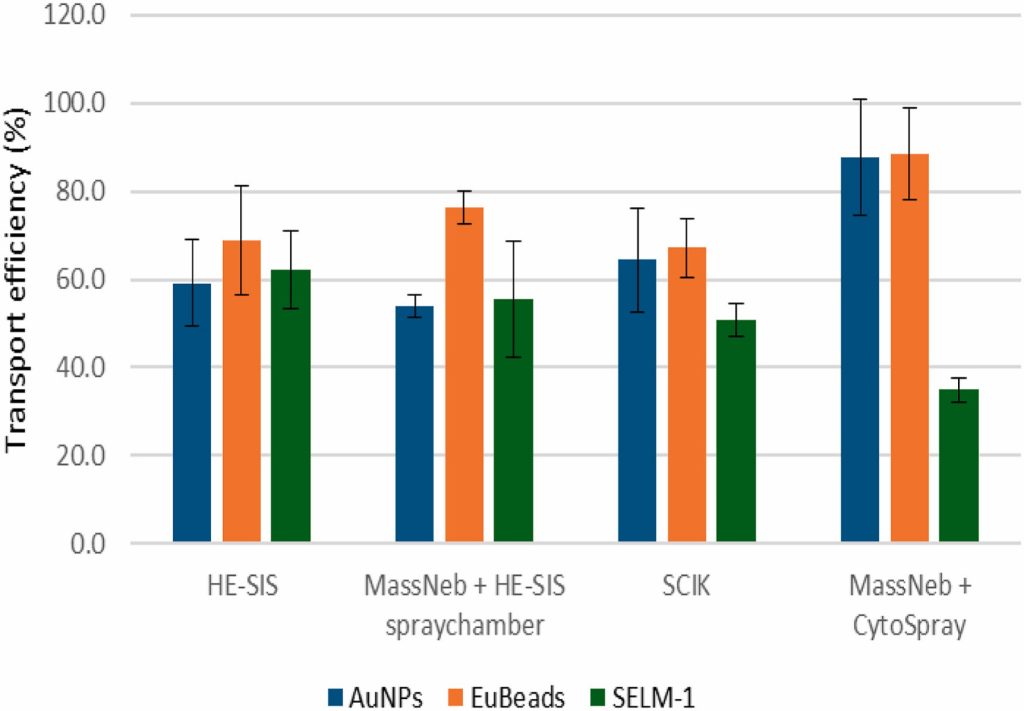
Figure 4. Transport efficiencies with the four microflow configurations evaluated for AuNPs, EuBeads and SELM-1. Adapted from Ref. [2].
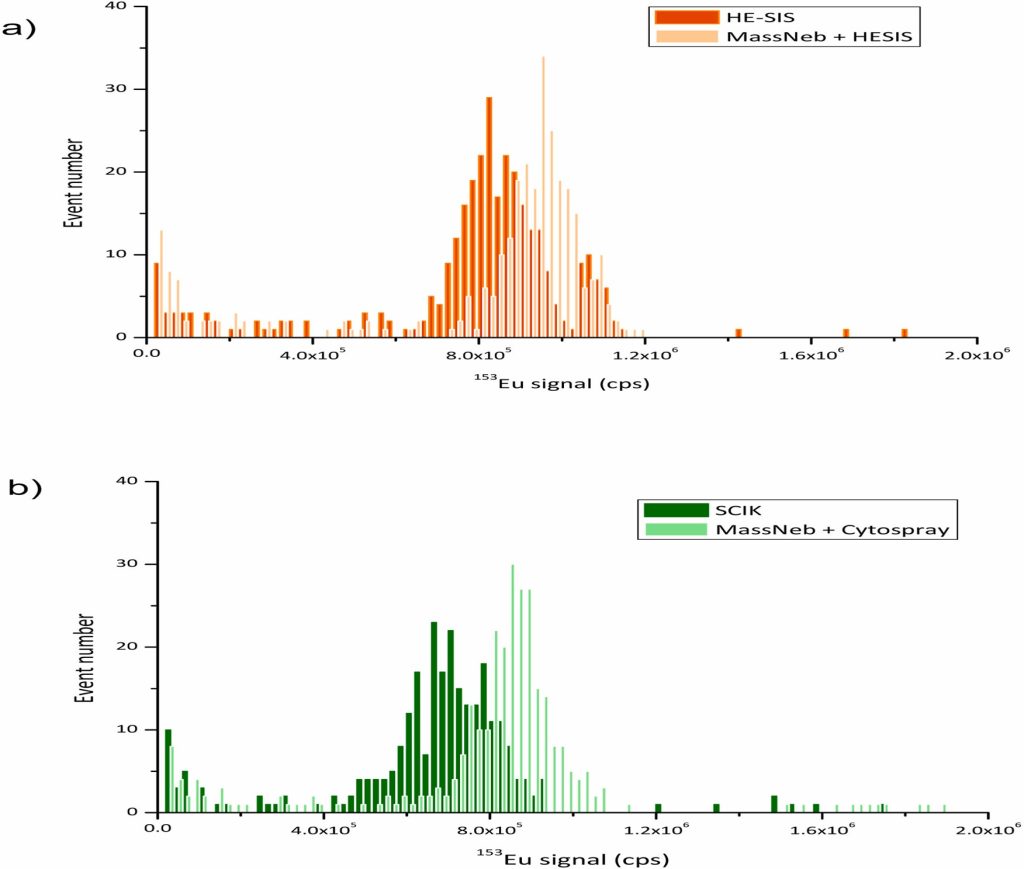
Figure 5. Single-event signal distributions for ¹⁵³Eu on Eu-loaded beads: a) HE-SIS vs MassNeb® + HE-SIS; b) SCIK vs MassNeb® + CytoSpray. Adapted from Ref. [2].
3.4 Operational flexibility and practical advantages
One of the most important characteristics of the MassNeb® is its operational versatility. Conventional nebulizers are typically optimized for either standard ICP-MS operation or microflow single-cell analysis, requiring different devices for different applications. In contrast, the MassNeb® demonstrated efficient operation across a broad flow-rate range from 10 µL/min to 0.4 mL/min.
This flexibility allows a single nebulizer platform to support conventional elemental analysis, single-particle analysis and single-cell workflows. Such versatility can simplify laboratory operation, reduce the need for multiple nebulizers and facilitate the transition between different ICP-MS methodologies.
Additional practical advantages were also identified during evaluation. The MassNeb® showed robust operation and did not present clogging issues during experiments. Furthermore, the low gas backpressure of the nebulizer allowed operation at higher gas flows compared to some conventional microflow nebulizers, facilitating optimization of sheath gas conditions in total-consumption spray chambers. The robust construction of the MassNeb® also represents an important practical advantage compared with fragile glass nebulizers commonly used in ICP-MS — reducing maintenance requirements and improving long-term operational reliability in routine laboratory environments.
4. Conclusions
The MassNeb® nebulizer demonstrated excellent analytical performance for both conventional ICP-MS and microflow SP/SC-ICP-MS applications. Under conventional operating conditions using a cyclonic spray chamber, the MassNeb® provided the highest analytical sensitivity among all evaluated systems.
When combined with total-consumption microflow spray chambers, the MassNeb® achieved transport efficiencies close to 90% for nanoparticles and polymeric beads, outperforming or matching dedicated commercial single-cell introduction systems. These results highlight the capability of the MassNeb® to maximize particle and cell transport into the plasma while minimizing sample losses.
The study also demonstrated the broad operational flexibility of the MassNeb®, which can be successfully operated both at conventional ICP-MS flow rates and under microflow conditions. This versatility allows a single nebulizer to support different ICP-MS workflows including total elemental analysis, SP-ICP-MS and SC-ICP-MS applications.
Overall, the obtained results position the MassNeb® as a highly versatile and efficient solution for advanced nanoparticle and single-cell ICP-MS methodologies.
References
[1] Corte-Rodríguez, M.; Álvarez-Fernández, R.; García-Cancela, P.; Montes-Bayón, M.; Bettmer, J. Single cell ICP-MS using on line sample introduction systems: Current developments and remaining challenges. Trends in Analytical Chemistry 132 (2020) 116042. https://doi.org/10.1016/j.trac.2020.116042
[2] Suárez Priede, A.; Corte-Rodríguez, M.; Gödde, H.; Montes-Bayón, M.; Bettmer, J. Single particle and single cell analysis by ICP-MS with pneumatic nebulisation: Comparing sample introduction systems. Talanta 295 (2025) 128372. https://doi.org/10.1016/j.talanta.2025.128372